
Barraques: A Valencian Townhouse Reimagined
Designing this townhouse in Valencia was an exercise in restraint, respect, and storytelling. Rather than imposing a new identity, the goal was to reveal and celebrate what was already there — the quiet beauty of traditional Valencian architecture and the deep connection between the city and its surrounding countryside.
From the outset, it was clear that the authentic features of the home would lead the design. Original hydraulic tiles, preserved in key areas of the house, became anchors of character and memory. Their patterns and patina tell stories of daily life over generations, grounding the interiors in a sense of place that no new material could replicate.

Preserving authentic details
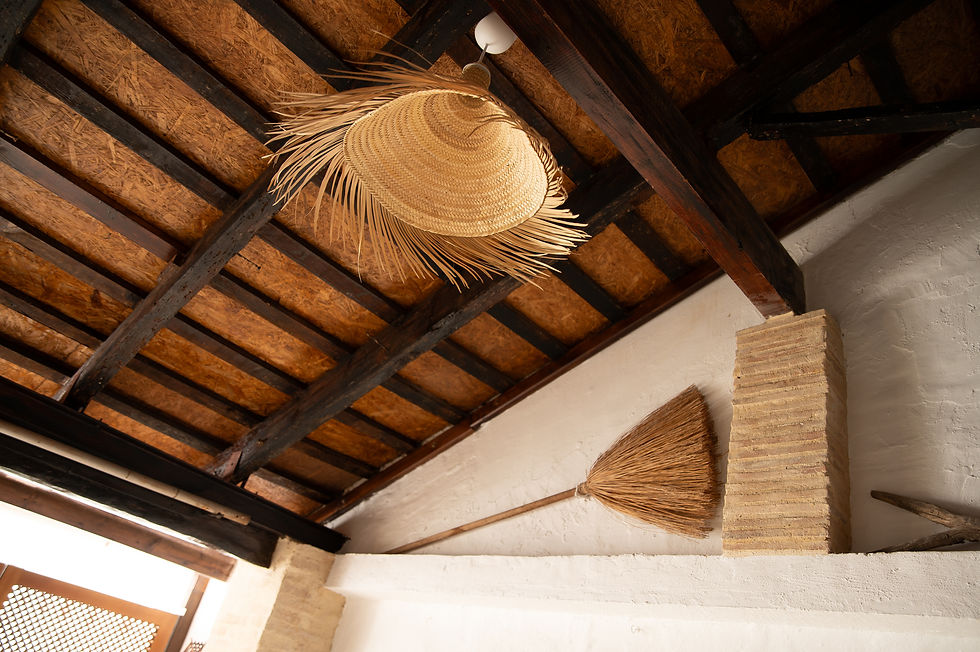
The first step was to identify the elements that gave the townhouse its unique Valencian feel. Features like the original tiled floors, exposed wooden beams, and traditional window shutters were key to maintaining the home's identity. These were carefully preserved and restored.

The townhouse is arranged over two floors and offers four bedrooms and two bathrooms, making it ideal as a generous yet intimate holiday retreat. Each space was styled to feel calm, lived-in, and honest — never overly curated, but thoughtfully composed. Natural textures and muted tones allow the original elements to breathe while creating a welcoming atmosphere for guests.

A strong influence throughout the house is Valencia’s rural soul, where the countryside still feels close and present. This connection is expressed through repurposed and meaningful objects sourced from the local environment: straw hats, traditional country tools, and timeworn antiques. Displayed with intention — particularly within a glass cabinet — these pieces act almost like a small, personal museum, celebrating craftsmanship, labor, and everyday heritage rather than decoration for decoration’s sake.

One of the most striking spaces in the home is the kitchen, which was largely left intact. Its vivid green tiles, original from the 1950s, bring both freshness and nostalgia, while the built-in cabinets made of brick and mortar are a reminder of a time when kitchens were constructed to last, not to follow trends. Rather than replacing these elements, the design embraces them, allowing their boldness and authenticity to shine.

This project is ultimately about balance: between old and new, city and countryside, comfort and character. The result is a townhouse that feels deeply Valencian — a place where guests can experience not just a holiday stay, but a genuine sense of life in Valencia, shaped by history, craft, and quiet simplicity.
Creating a Welcoming Rental Space
The goal was to make the townhouse appealing to short-term renters who want a comfortable stay with local character. To achieve this, the design focused on:
Comfort: Adding cozy seating areas, soft textiles, and practical storage solutions.
Functionality: Clear layouts and well-equipped kitchen and bathroom spaces.
Local touches: Incorporating Valencian ceramics, artwork, and textiles to reflect the region’s culture.
Remote working flexibility: Several desks and comfortable office chairs create the perfect compromise for renters looking to work while away.
The result is a space that feels both lived-in and inviting, perfect for travelers seeking an authentic experience.

Before and After: Visual Contrast
The transformation is striking. The original interiors felt dark and cramped, with heavy furniture and dated decor. After the renovation, the rooms are bright and open, with a fresh colour palette and carefully chosen furnishings that highlight the home’s original features.
The preserved tiled floors and wooden beams now stand out as charming details rather than being overshadowed by clutter. The new layout improves flow and usability, making the townhouse feel larger and more welcoming.
Final Thoughts
This project shows how thoughtful design can breathe new life into an older home without erasing its history. By focusing on preservation, smart budgeting, and creating a rental-friendly space, the townhouse in Valencia now offers guests a comfortable stay with a genuine local atmosphere.
If you are considering renovating a similar property, remember to:
Identify and preserve unique architectural features
Remove outdated or bulky items that do not serve the new purpose
Prioritize updates that improve light, comfort, and functionality
Add local touches to create a sense of place

Written by Andrea Munoz
Slowtrends 2025


