
Ombria apartment: function & story
Preservation as a starting point
This apartment sits in a small town tucked into a valley, about 45 minutes outside Valencia. The kind of place where time moves differently, where traditions don’t feel curated but simply lived. From the beginning, the intention wasn’t to impose a new aesthetic, but to listen to what the space — and the town — already had to say.
The styling process started with preservation. As much of the existing furniture as possible was kept and reworked into the new vision. Rather than replacing, the focus was on revealing: highlighting materials, proportions, and details that felt honest and rooted. This approach naturally led to a palette of natural elements — teak wood, rattan, straw, and woven fibres — materials deeply connected to the area’s long-standing tradition of artisan-made furniture.


When Spaces Carry Memory and tradition
Teak wood, rattan, straw, woven natural fibres — these weren’t trends to be imported, but materials already embedded in the town’s visual and cultural language. Preserving the existing furniture wasn’t a limitation; it was an invitation to work with what was already meaningful.
The apartment’s most striking feature is the master bedroom. Originally part of the living room when the building was constructed in the 1950s, the space still carries a decorative fireplace from that era. This room functioned as the living space back then — a place of gathering, warmth, and shared time. The bedroom also features a walk-in wardrobe that runs the length of the fireplace wall in what used to be the kitchen pantry.
Over the decades, layouts changed, needs shifted, but the fireplace remained. Instead of treating it as a relic, it became a quiet anchor — a reminder of the apartment’s past life and the generations that passed through it. The room is generous in size, cosy and calm, designed to feel restorative rather than staged.


The apartment includes modest, functional spaces: a small balcony overlooking the street, a well-equipped kitchenette, a breakfast bar integrated into a utility room. Nothing oversized, nothing excessive. Each element was considered in relation to how people would actually inhabit the space — especially those coming to the town not for spectacle, but for nature.
The surrounding landscape shapes the way the apartment is used. Visitors arrive to walk the valley paths, hike mountain trails, climb rock faces, swim in a natural saltwater pool, or explore subterranean caves beneath the terrain. After days spent outdoors, the interior doesn’t need to impress — it needs to receive.
This relationship between interior and exterior is central to the Slow philosophy. Spaces should respond to their environment, not compete with it. When design aligns with place, it supports a slower rhythm of living: early nights, unhurried mornings, simple meals, and long pauses.
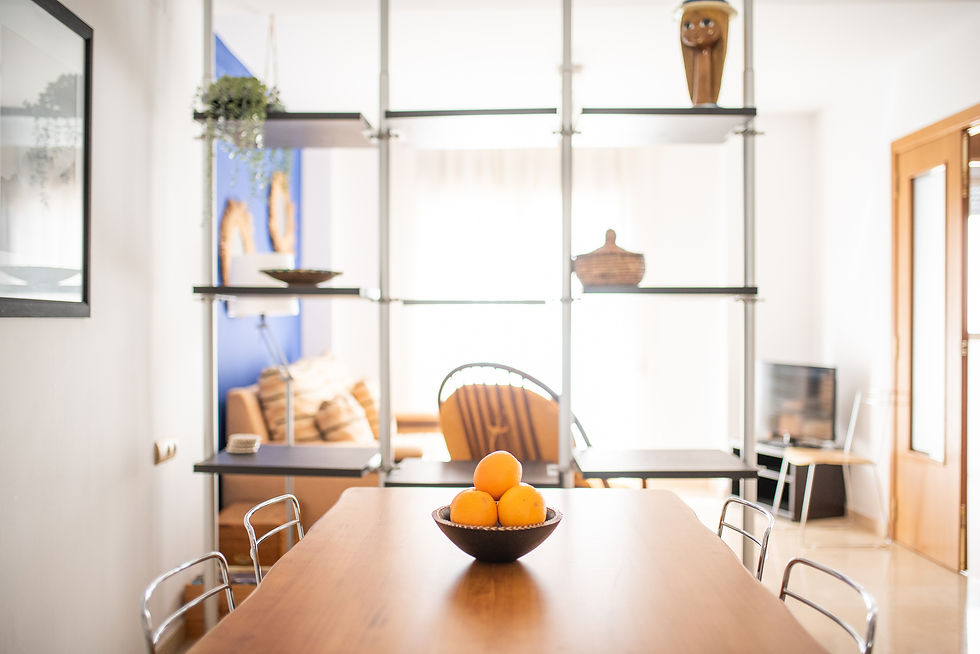
Although the apartment was styled for holiday rentals, it resists the language of short-term consumption. Instead of maximising visual impact for quick turnover, the focus was on durability, comfort, and familiarity.
In an era where destinations are often packaged for instant appeal, preservation becomes a form of quiet resistance. Choosing not to replace. Choosing to work locally. Choosing to let a place remain itself. Not for the photo, but for that sense of place.

Ultimately, the goal was to create a space that feels aligned with its surroundings. A place that invites rest after long walks, quiet mornings before hikes, and evenings spent reconnecting with simple comforts. By preserving what already existed and grounding the design in local materials and traditions, the apartment becomes less of a destination in itself — and more of a comforting companion to the landscape that surrounds it.
Slow design starts with paying attention
What this project and process ultimately reinforces is that slowness is not a fixed style, but a way of thinking. Beyond the specifics of this particular apartment, the process reveals broader principles about how we approach design, preservation, living rhythms and place.
Small shifts in perspective can lead to more grounded, enduring spaces. Whether applied to interiors, or everyday living, they reflect a belief that meaning is built over time, not manufactured overnight, and that less intervention often creates more depth.
Before adding anything new, observe what already exists — materials, proportions, history, and local traditions often provide the strongest direction. It is easier to style a blank canvas and make it a cohesive ending point, but it is far more valuable and sustainable to use what is already there and complement it with elements that carry a similar story.
To honour that connection between history, craft, authenticity, comfort and quiet beauty is rewarding because it asks us to slow down enough to notice what truly endures. And in doing so, we allow design to become a form of care: for place, for memory, and for the rhythms of life that unfold gently within them.
Written by Andrea Munoz
Slowtrends 2025


